
Agents Don't Want Training. They Want Coaching.
By Rob Tucker ·
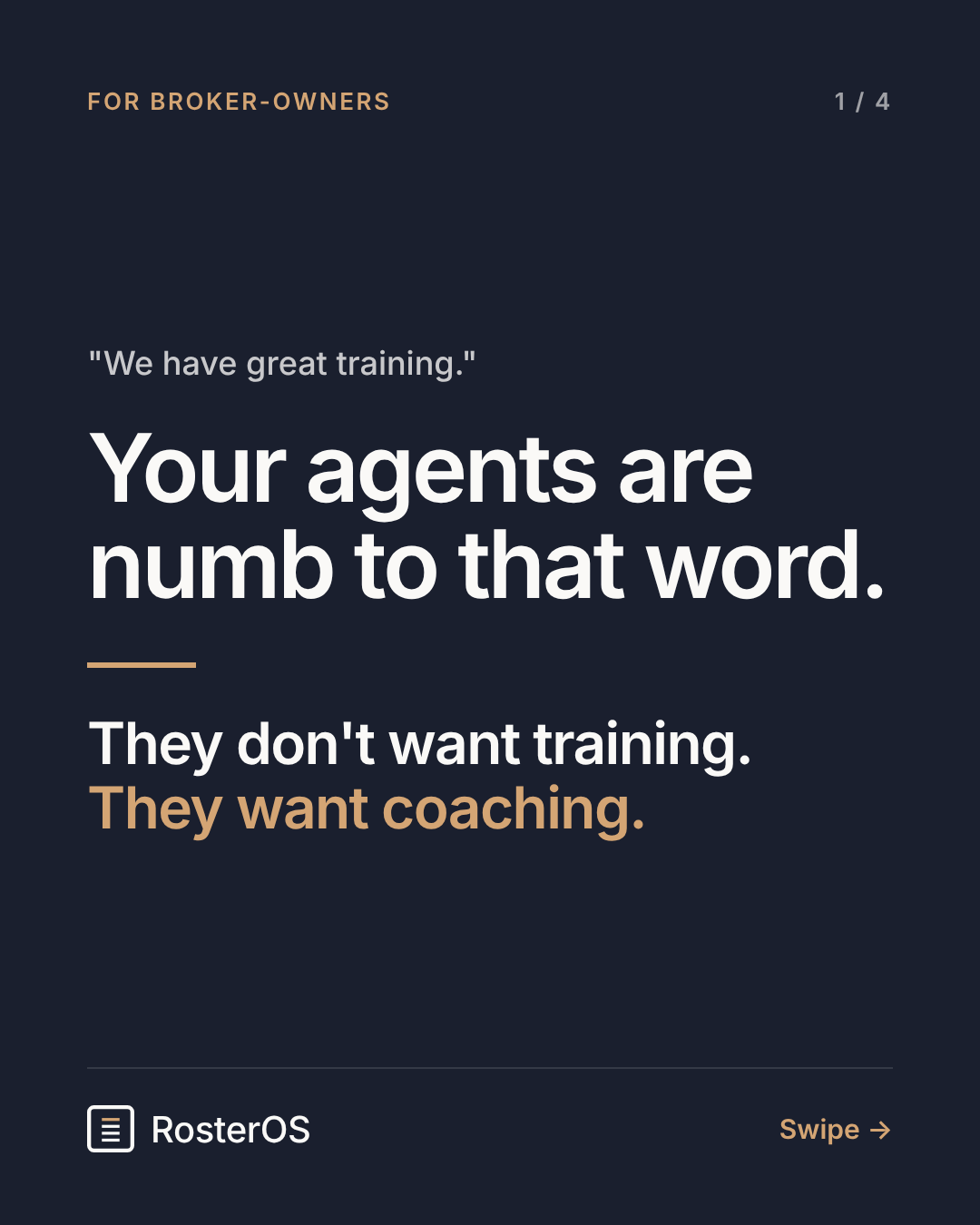
Walk into almost any brokerage recruiting conversation and you'll hear the same line: "We have great training." Everybody has classes for this and classes for that. It's a buzzword that's been going around for so many years that agents are numb to it. When every office says the same thing, it stops meaning anything.
Agents aren't looking for training. They want coaching. If you're still leading with training, you've already lost the battle.
What's the difference?
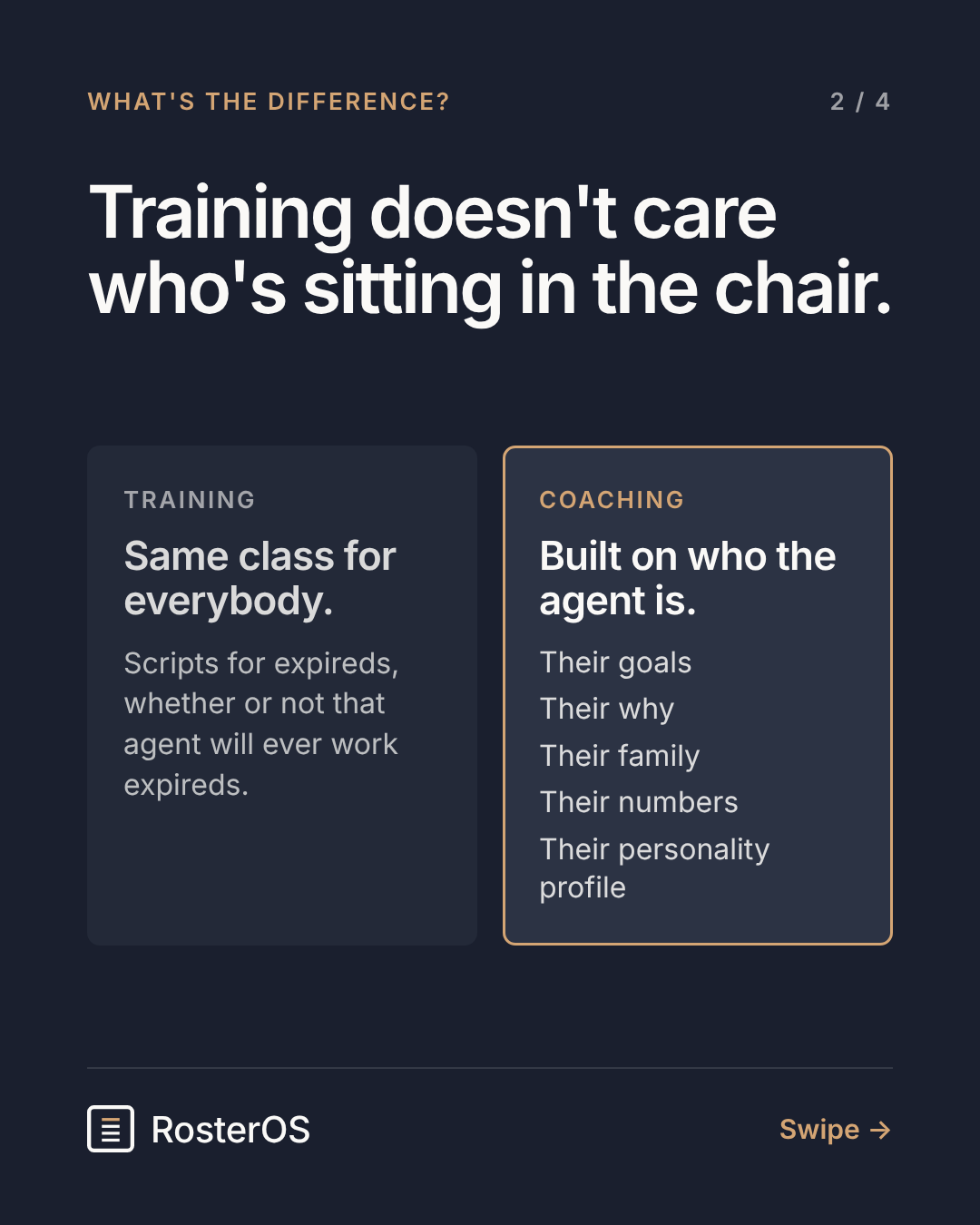
Training is the same content delivered to everybody. A class, a script, a process. Some of that is important, and I'm not saying get rid of it. But training doesn't care who's sitting in the chair.
Coaching does. With coaching, you know your agent:
- their goals
- their history
- their why
- their family
- their numbers and their average sales price
- their personality profile
And then you change your coaching based on all of that, so it's individual. Coaching can still happen in a group. But it has to be aimed at each agent and what's important to them.
The $8,000 coach and the YouTube videos
I was talking with an agent recently about an outside coach she'd been considering. The coach wanted $8,000 a year. And the plan was to get her doing YouTube videos.
She doesn't want to do YouTube videos. It doesn't fit her personality either. So what is she paying for? Somebody else's playbook.
That's the trap. A lot of coaches, and a lot of managers, coach agents to do what worked for them. You've got to find a coach who isn't going to push you into what they want to do, but into what's right for you.
That's the same conversation broker-owners should be having with their own agents.
Where DISC comes in
The personality profile is the piece most offices skip, and it's the one that makes coaching individual. I use DISC.
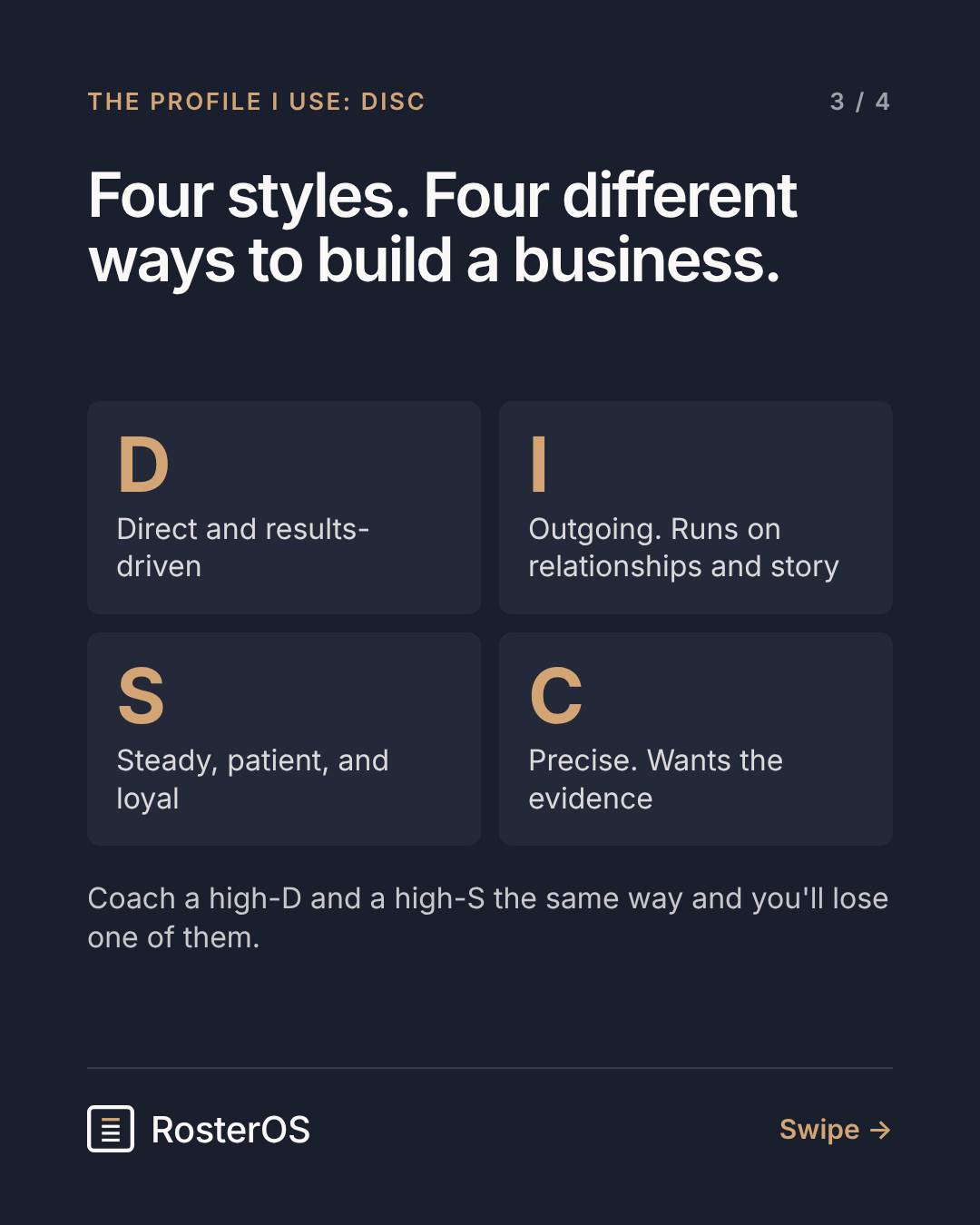
The short version: DISC sorts people by whether they move fast or measured, and whether they focus on the task or on people. That gives you four styles. D is direct and results-driven. I is outgoing and runs on relationships and story. S is steady, patient, and loyal. C is precise and wants the evidence.
Now think about what that means for coaching. A high-D agent might love a hard prospecting block. A high-S agent might build a great business by taking care of a sphere that trusts them. Hand them both the same plan and you'll lose one of them. Not because they can't succeed, but because you asked them to be somebody they're not.
I don't coach agents in my box
I sold a lot of houses working expireds and for-sale-by-owners. If I coached every agent in my office to do what I did, I'd be coaching half of them into something they're never going to do.
So I find out who they are first. Then I coach them to who they are, and I make sure I know what's important to them.
There's a second part to that. Who they are right now isn't the person they need to be to reach the next level. Good coaching meets the agent where they are and also helps them see who they have to become to get where they want to go.
Your split is a coaching fee
Your agent pays you through the split on every closing. An outside coach asks for $8,000 a year. Either way, the agent is paying for help. The question is whether they're getting it.
If you run an office, you are selling. Not always for money, but you're selling what you can do to help an agent grow. Coaching is what makes that worth it.
And if you're not sure how to coach yet, that's fine. Most managers were never taught. Get a good coach yourself, someone who's been there and done it. You can't give your agents something you've never had.
Start with one agent
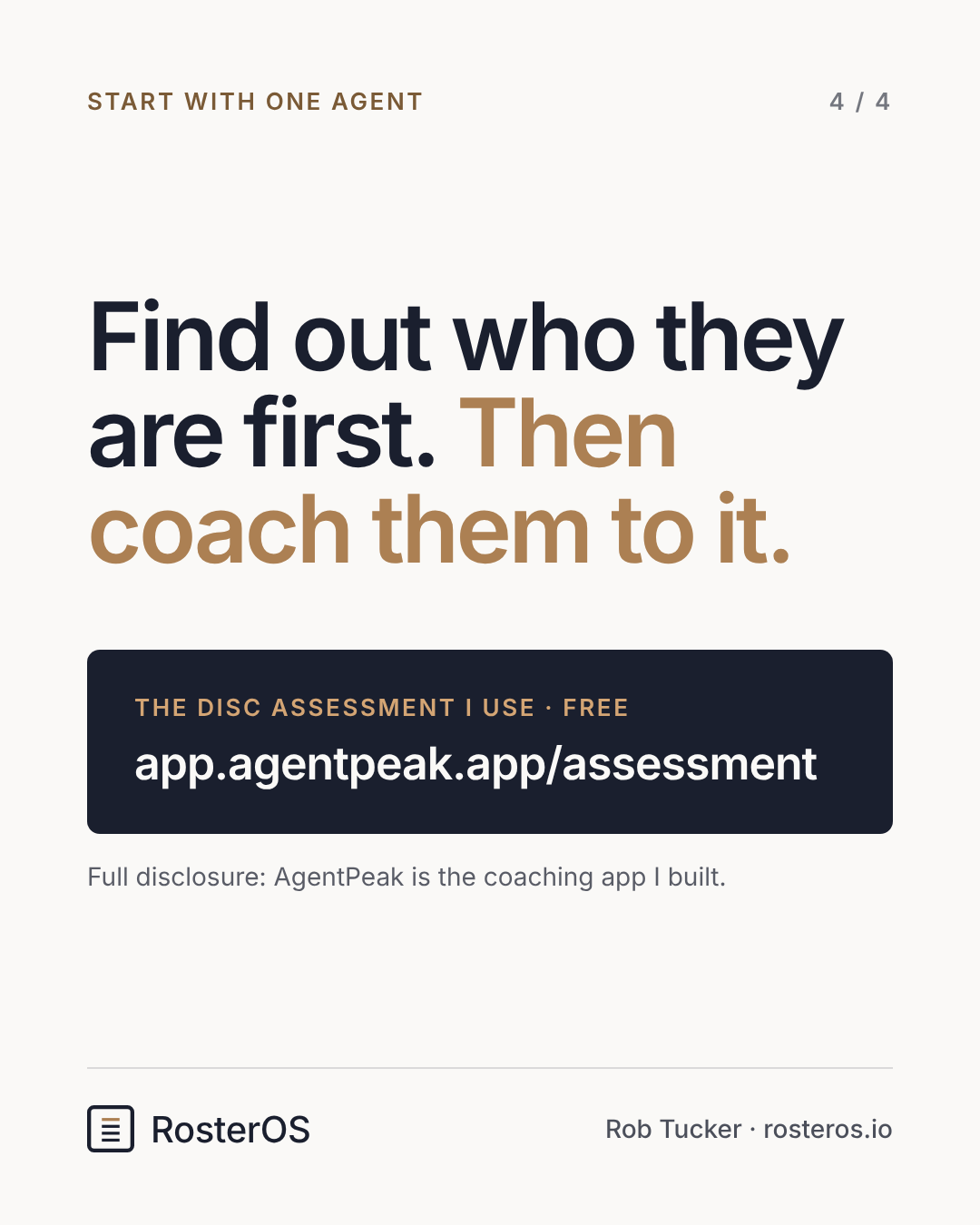
Pick one agent this week. Sit down and learn their goals, their why, their numbers, and their personality profile. If you want an easy place to start, the DISC assessment I use is free at app.agentpeak.app/assessment. Full disclosure: AgentPeak is the coaching app I built.
Then coach that agent to who they are. Do it again next week with another one.
Coaching agents to who they are is a big part of how I think about retention, and it's behind what I'm building at RosterOS. Learn more at rosteros.io.