
Recruiting Doesn't Solve Everything
By Rob Tucker ·
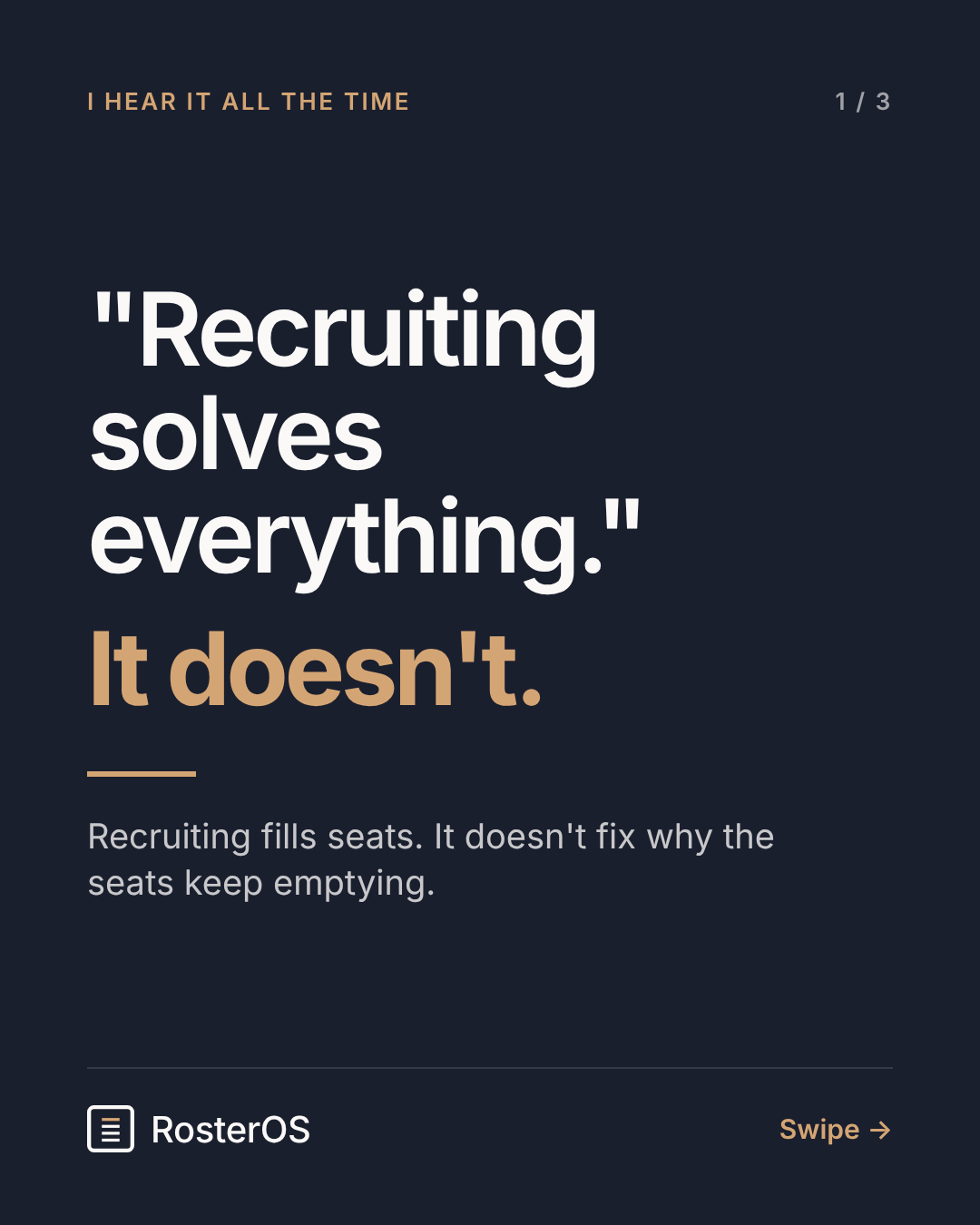
There's a line you'll hear in almost every brokerage: "Recruiting solves everything."
I understand why people say it. When numbers are down, recruiting is the most visible thing you can do. Sign a few agents, post the welcome graphics, and it feels like progress.
But recruiting only solves one problem: empty seats. It doesn't solve the reason the seats keep emptying. If agents are leaving faster than you can replace them, more recruiting just means more people walking through the same office and out the same door.
So before you add another recruiting goal, look at the person running the office.
The back door is a leadership problem
When an agent leaves, the reason you hear is usually money. Sometimes that's the real reason. But a lot of the time, the agent left because nobody was leading. Nobody noticed them, nobody helped them grow, and nobody fixed the things that frustrated them.
That's not a recruiting issue. That's a leadership issue. And it's the one most companies don't want to look at, because it means looking at who they hired.
Managers and leaders are not the same thing
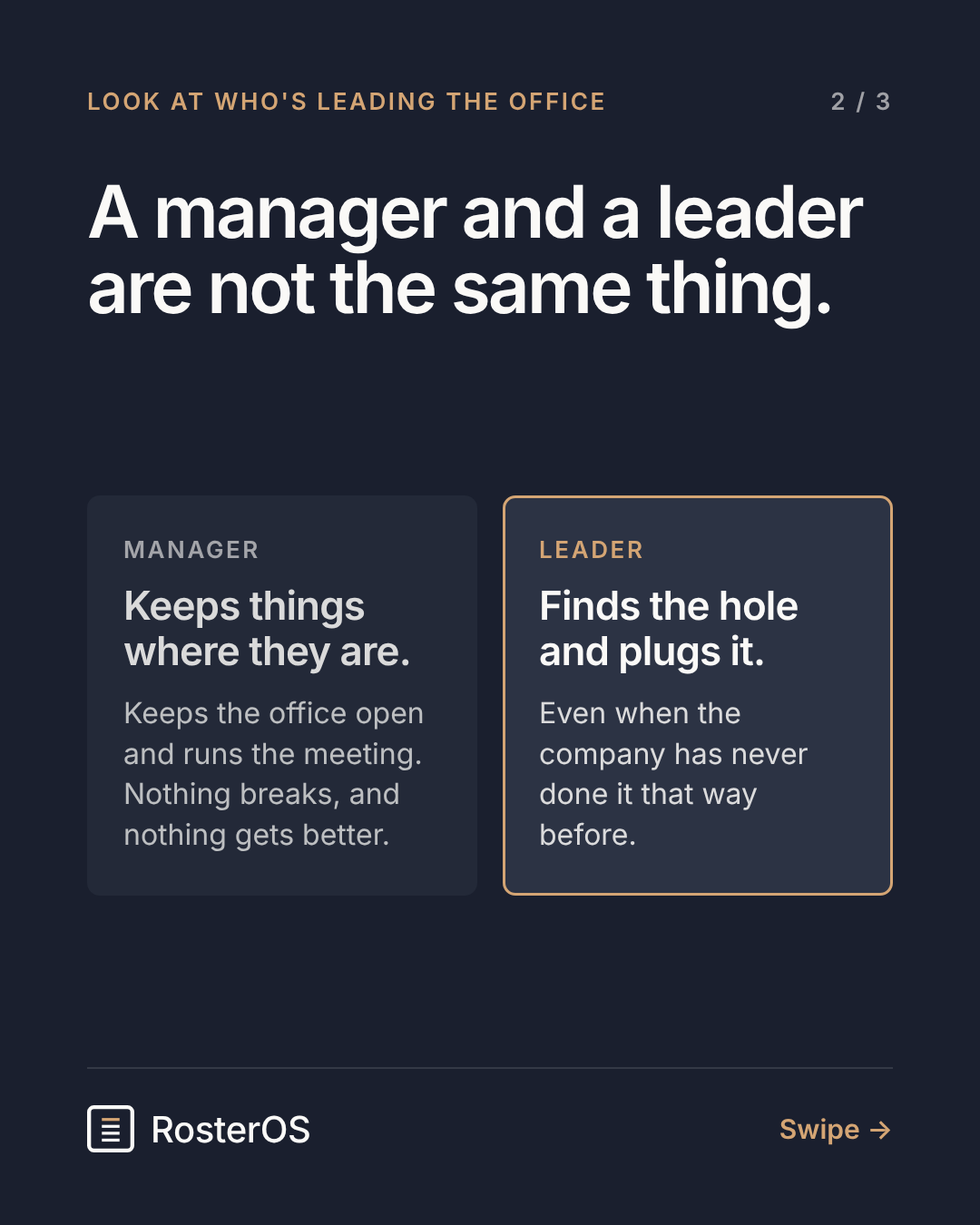
A manager is there for the status quo. They keep the office open, answer the questions, run the meeting, and keep things roughly where they were. Nothing breaks, and nothing gets better.
A leader is different, and you can usually see it from day one. The energy is different. They find the holes in the office, and instead of explaining why the holes can't be fixed, they go fix them. Even if it's something the company doesn't do. Even if nobody has asked them to.
I sit in on a lot of calls and meetings in this industry. I hear the excuses. I hear "we can't do that." What I don't hear often enough is somebody saying, "Here's the problem, and here's how I'm going to solve it."
The 90-day test
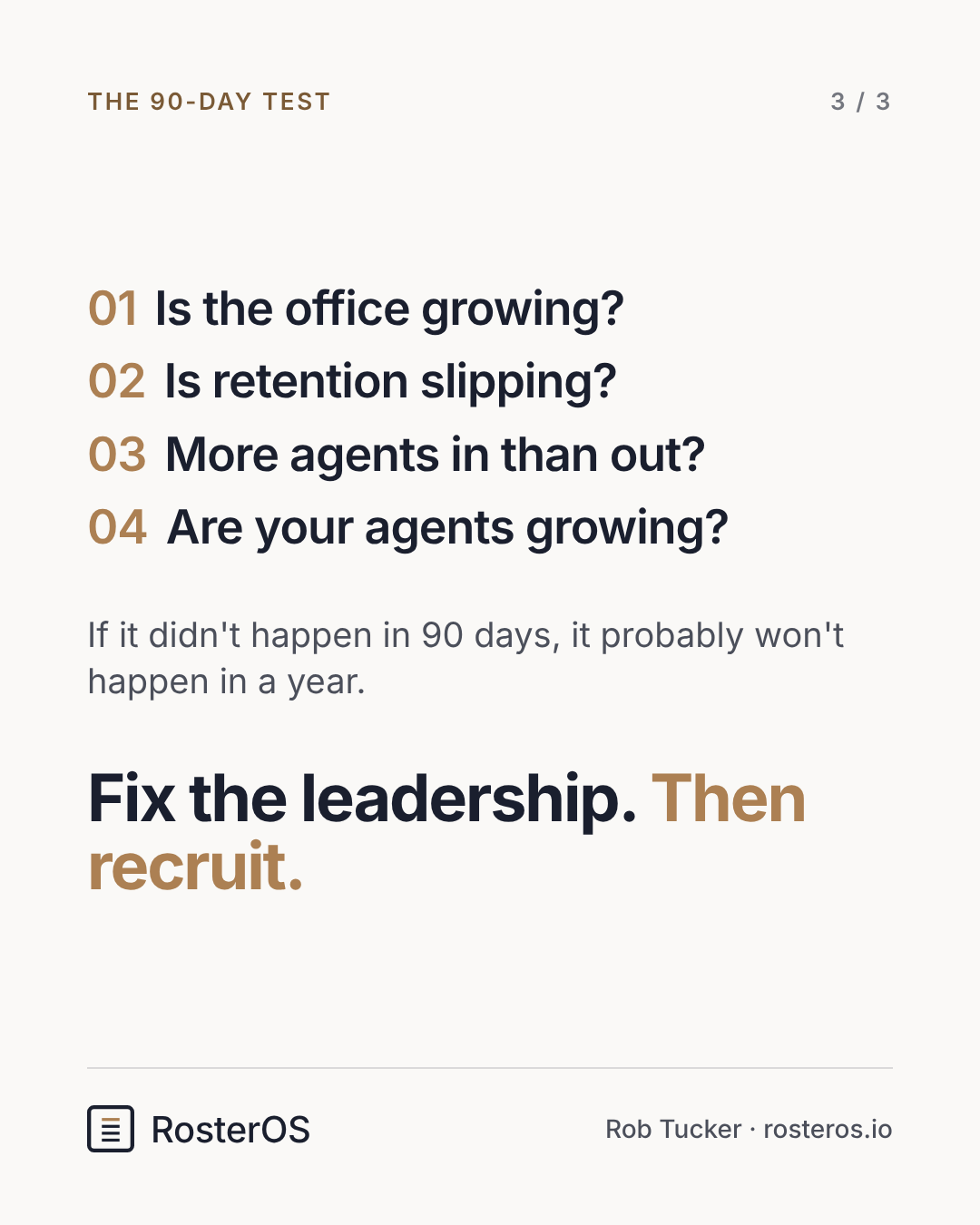
How do you tell which one you have? Look at four things:
- Is the office growing?
- Is retention suffering?
- Are you bringing in more agents than you're losing?
- Are your agents growing and increasing their business?
If the answers are no, and you can see exactly where the gaps are, you probably have a manager.
Here's the hard part. If they haven't moved those numbers in 90 days, a 30-day call plan isn't going to change it. If it didn't happen in 90 days, it probably won't happen in six months. If it didn't happen in a year, it's not going to suddenly happen next year. It's just not.
How to find leaders
Hire to grow, not to fill a position. An empty office seat is a problem, but putting the wrong person in it is a bigger one.
Ask what they've built and what they've solved. Not what they were responsible for. What they actually built, and what problem they fixed that nobody else had.
Ask if they competed at a high level. This is one of my favorites. Someone who played a sport at a high level usually knows how to take coaching, how to be part of a team, and how to master a position through repetition. That's most of what leading an office takes.
Look at their habits. How they carry themselves, how they show up, how they take care of themselves. The way someone runs their own life tells you a lot about how they'll run an office.
Then pay them
This is the part a lot of companies skip. If you want leaders, you have to pay like you want leaders. A real leader has options. If you won't pay them correctly, they'll find somebody who will, or they'll go build something on their own. And they can.
Managers won't leave over it, and they won't complain about it either. That should tell you something.
Do it in the right order
Recruiting matters. I've recruited over 2,000 agents, and I'm still recruiting. But recruiting into an office with a leadership problem is like pouring water into a bucket with a hole in it.
Fix the leadership first. Then recruit. In that order.
Giving the leader of an office a clear view of who's growing, who's drifting, and where the holes are is a big part of what I'm building at RosterOS. Learn more at rosteros.io.